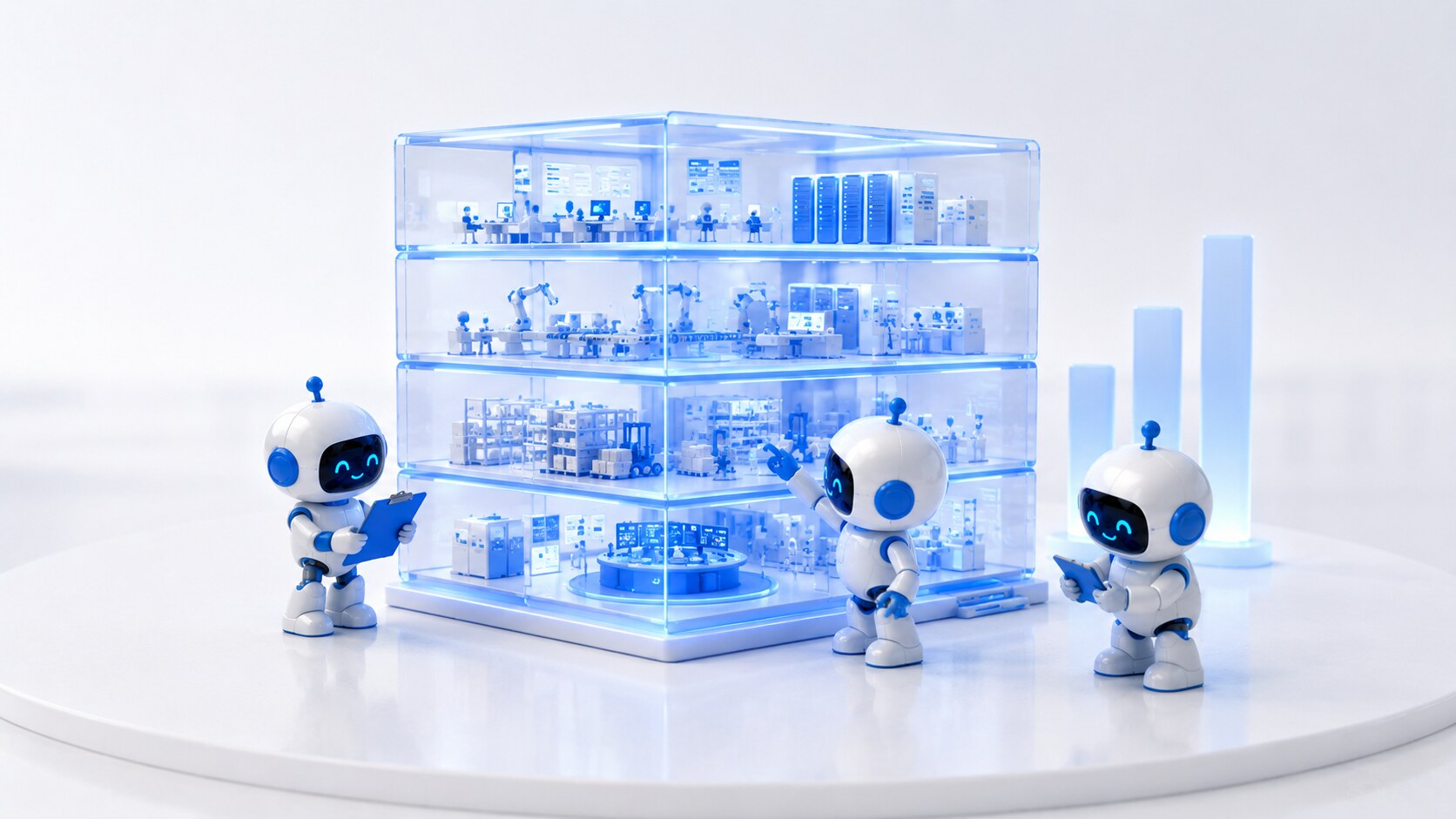
Three Sticklebrick robots inspecting a translucent blue cross-section model of an operation across four floors — calm, forensic, the work in progress.
— 01
The work

The bricks already in the wall.

Live work, not a portfolio reel. Every Sticklebrick engagement is a single AI brick added to an operation that was already running. Below is the work that’s shipped — an investment-club portfolio monitor agent, running hourly through the trading day and producing a long-form monthly review with Bull, Balanced and Bear stance recommendations across a 26-name watchlist.

More case studies land as engagements ship · First one below


— 02 Case study · 01

University & Literary Investment Club. A portfolio monitor that never sleeps.

UIC is a long-standing university investment club running a concentrated 26-name global equity watchlist across the FTSE 100, FTSE 250, S&P 500, Nasdaq and Dow. The members are part-time analysts with full-time studies. They needed an agent that would do the patient, repetitive monitoring work for them — hourly through the trading day, and once a month at depth — and give them a clear stance to defend at the next meeting.

Engagement · E—02 Pilot · E—03 Integrate Sector · Finance / Education
Status · Live

The brief

Build a calm, evidence-based portfolio monitor that watches a 26-name watchlist continuously, surfaces what’s actually moved and why, and translates the noise into a single recommended stance: Bull, Balanced or Bear. The members keep the vote. The agent keeps the watch.

What we built

  • Hourly Monitor Live trading-day view. Index closes, top movers, name-level price action, fresh headlines threaded against the 26-name watchlist.
  • Monthly Monitor Long-form review. Refreshed bull and bear cases for each name, an Overweight / Neutral / Underweight call, 28-day chart and a 6-month forward scenario.
  • Stance engine Aggregates the watchlist signals and outputs a single house view — Bull, Balanced or Bear — with the reasoning shown, not hidden.
  • Ask Claude A research input box inside the dashboard. Members research any company — not just the 26 — and get back a synopsis in the exact format of a watchlist card.

How it sits in the operation

  • Hosting Two Netlify sites, redeployed automatically each refresh. Public read-only dashboards, no login friction for members.
  • Cadence Hourly through the trading day. Full long-form refresh on the 1st of each month.
  • Inputs Live index closes, name-level price action and current headlines — routed through trusted data partners, not scraped.
  • Output Two dashboards plus an on-page research agent. Members read, debate, vote. The brick sits next to the analyst, not above them.
Watchlist26 names · 5 indices
RefreshHourly · Monthly
StackClaude agents · Netlify
StatusLive · in members’ hands

— 03 The stance engine

Bull. Balanced. Bear.

Every refresh, the agent collapses the watchlist into one of three house stances — with the case shown openly, not buried in a black box. The members read it, argue with it, and take the vote.

Bull When the signal lines up Lean in

Breadth widening across the watchlist, OW calls outnumbering UW, momentum confirmed by fresh earnings or guidance. The agent recommends tilting toward the names where the bull case is freshly evidenced — and names the three it would buy first.

Balanced When the picture is mixed Hold the line

OW and UW calls roughly even, leadership rotating across indices, no decisive macro signal. The agent recommends staying invested but trimming the noisiest positions, and lists the names whose stance has flipped since last review.

Bear When the case is breaking down Step back

UW calls dominant, bear cases strengthening across multiple sectors, scenarios skewed negative across the 6-month forward view. The agent recommends raising cash and flags the names it would exit first — with the reason on the card.


— 04 See it running

Two dashboards. In the members’ hands.

Both monitors are public, read-only and refresh on their own cadence. Open them in a new tab and let them run alongside whatever you’re doing — that’s how UIC members use them.

Live links open in a new tab · Both sites refresh automatically · No login required


— 05 What we learned

The brick belongs to the analyst.

L—01

The agent monitors. The members decide.

The stance engine never sends an order. It produces a defended view, in the format the members already use to argue with each other. The vote stays human, and the audit trail stays clean.

L—02

Show the reasoning on the card.

Every OW / N / UW call carries a one-paragraph bull case and a one-paragraph bear case on the same tile. Nothing is buried. If a member disagrees, they disagree with the argument, not with a number.

L—03

Two cadences beat one.

An hourly view answers “what just moved?”. A monthly view answers “what do we believe now?”. Splitting them keeps the daily noise out of the long-form review, and keeps the monthly review out of the trading day.

L—04

Make the off-list research first-class.

The “Ask Claude” box on the monthly dashboard turned out to be the feature members reach for most. Letting them research anything in the watchlist format — not just the 26 names already on file — is what made it part of the meeting, not adjacent to it.


— 06 / Next step

Want a brick like this in your operation?

The UIC monitor is one shape of agent. There are others — for trade counters, fleets, service desks, finance teams. Twenty minutes on a call and we’ll tell you straight whether the right brick exists yet for your operation.